-
The game doesn’t rely on memory for exceptions

Exceptions in game rules are those annoying moments where the patterns you’ve learned suddenly don’t work anymore. You know the drill—”most of the time you do X, except when Y happens, then you do Z instead.” These special cases force players to keep a running mental list of “yeah, but remember…” situations. The real problem…
-
Design uses grouping to help players navigate elements

Grouping is a fundamental design principle where related elements are visually clustered together to help users quickly understand relationships and navigate information. Rather than scattering related content across a layout, effective grouping uses proximity, containers, color, and spacing to create clear visual chunks that the brain processes as unified concepts. This principle reduces cognitive load…
-
Icons represent familiar or frequently needed ideas
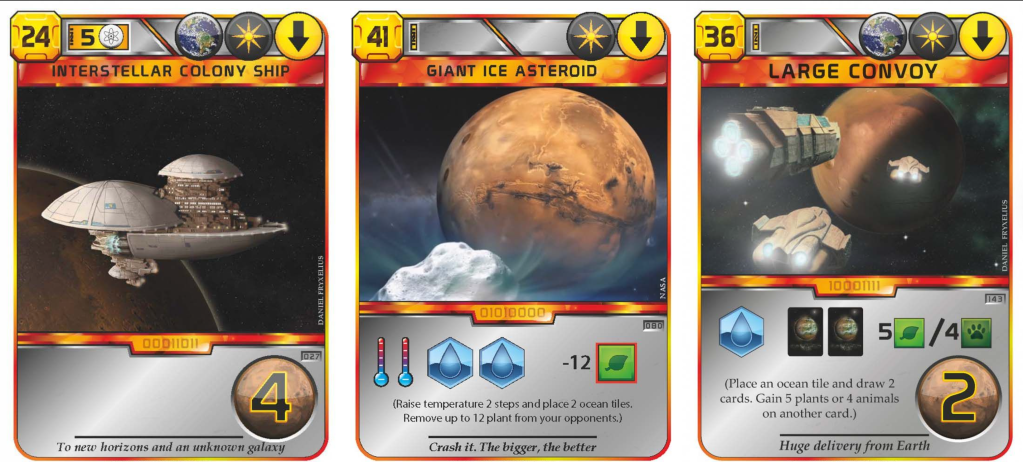
Effective icons in board games serve as visual shortcuts that replace text with instantly recognizable symbols, reducing reading time and cognitive load during gameplay. Icons work best when they represent either familiar concepts that players already understand from broader cultural context, or frequently needed information that appears repeatedly throughout the game. When designed well, icons…
-
Tesler’s Law
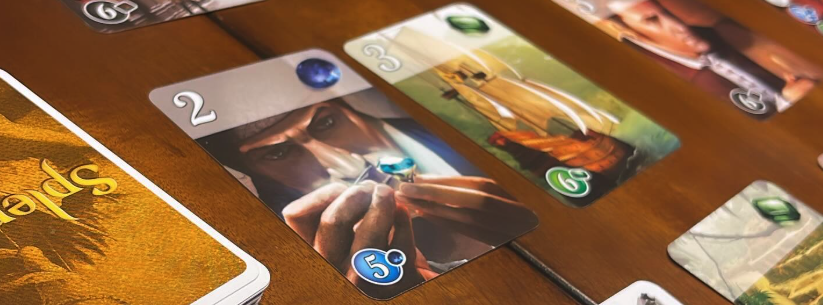
Tesler’s Law, also known as the Law of Conservation of Complexity, states that every system has an inherent amount of complexity that cannot be eliminated—it can only be moved around. Named after computer scientist Larry Tesler, this principle reveals a fundamental truth: complexity doesn’t disappear through good design; instead, designers choose who handles it. The…
-
The mechanics give players a sense of achievement

Mechanics in games that give players a sense of achievement are crucial for creating satisfying player experiences. These mechanics tap into fundamental psychological needs for competence and progress. When players feel they’ve genuinely earned their successes through skillful play, it creates positive reinforcement that elevates the experience. This sense of achievement transforms mechanical interactions into…
-
The game uses scarcity well

Scarcity creates tension and meaningful choices in board games by deliberately limiting resources, whether through finite action spaces, limited card draws, or countdown timers. This constraint transforms simple decisions into strategic puzzles, forcing players to prioritize and consider opportunity costs. When implemented effectively, scarcity doesn’t feel punitive—it creates the satisfying challenge of optimization that keeps…
-
Zeigarnik Effect

The Zeigarnik Effect, named after psychologist Bluma Zeigarnik, describes the human tendency to remember unfinished or interrupted tasks better than completed ones. This happens because an incomplete task creates a state of mental tension and cognitive dissonance, which keeps the task active in our working memory. Once the task is completed, this tension is relieved,…
-
Physical components are easy to interact with
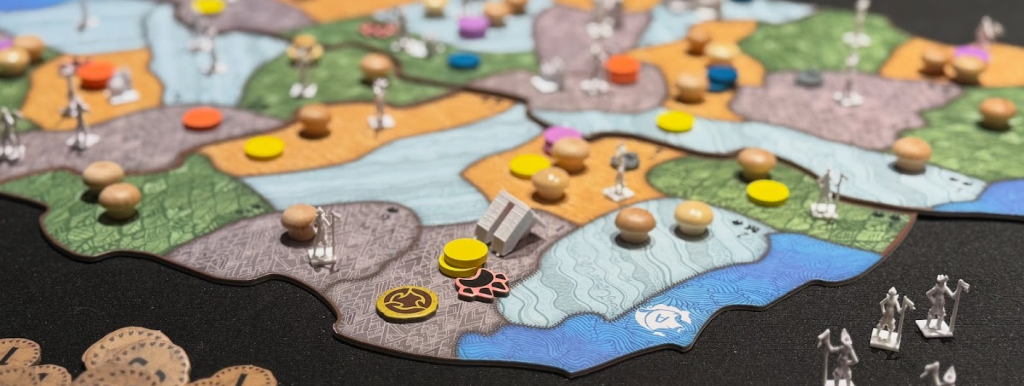
Good game design extends beyond rules and mechanics; it’s also about a game’s physical form. When players can easily handle pieces, read text, and understand visual cues without confusion or frustration, the game’s User Experience (UX) is enhanced. This is the difference between a game that feels intuitive and one that feels like a chore.…
-
Players can impact random events in meaningful ways

In board game design, few moments are as thrilling—or as frustrating—as the roll of the dice or the draw of a card. Random events are a pillar of game design, introducing unpredictability makes a game replayable. Yet, when pure luck dictates the outcome without any player input, the experience can feel hollow and even unfair.…
-
Turns increase in impact as the game progresses

With this lens, we are considering how turns in a game increase in impact and importance as the game progresses. Often, this culminates in big and exciting turns to end the game. Not all games have this; some go at an even level the whole way through. Others grow and almost spiral towards being too…

