
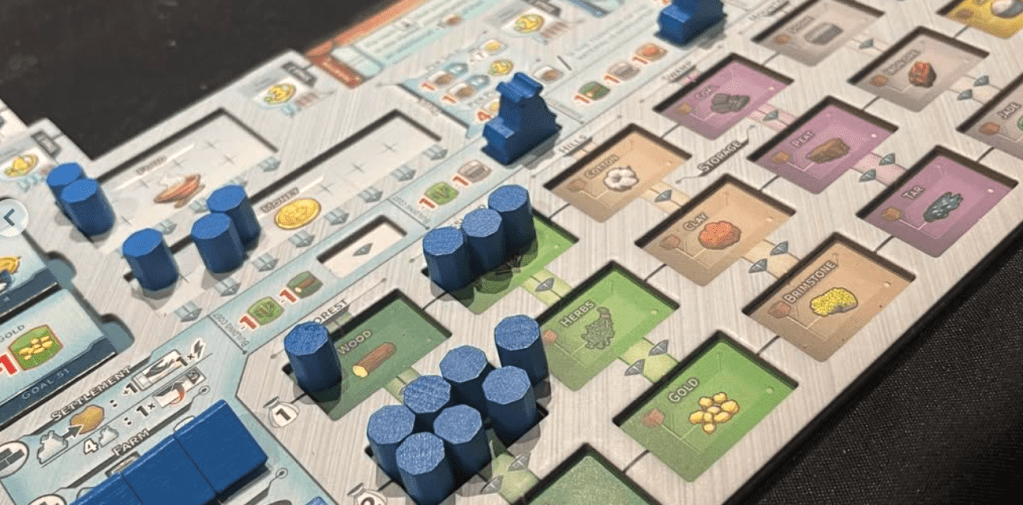
In board game design, form factor refers to the physical size, shape, and structural configuration of a game’s components and its overall tabletop footprint.
While the term originates in hardware engineering (describing the physical dimensions of computers or components), in tabletop game design it directly impacts Player Experience (PX), usability, manufacturing cost, and retail presence.
A simple, yet prominent aspect of form factor is that players can physically access everything. If players are unable to reach or see components, they are more likely to ignore them. This often leads to a natural imbalance among players who have access vs those who do not.
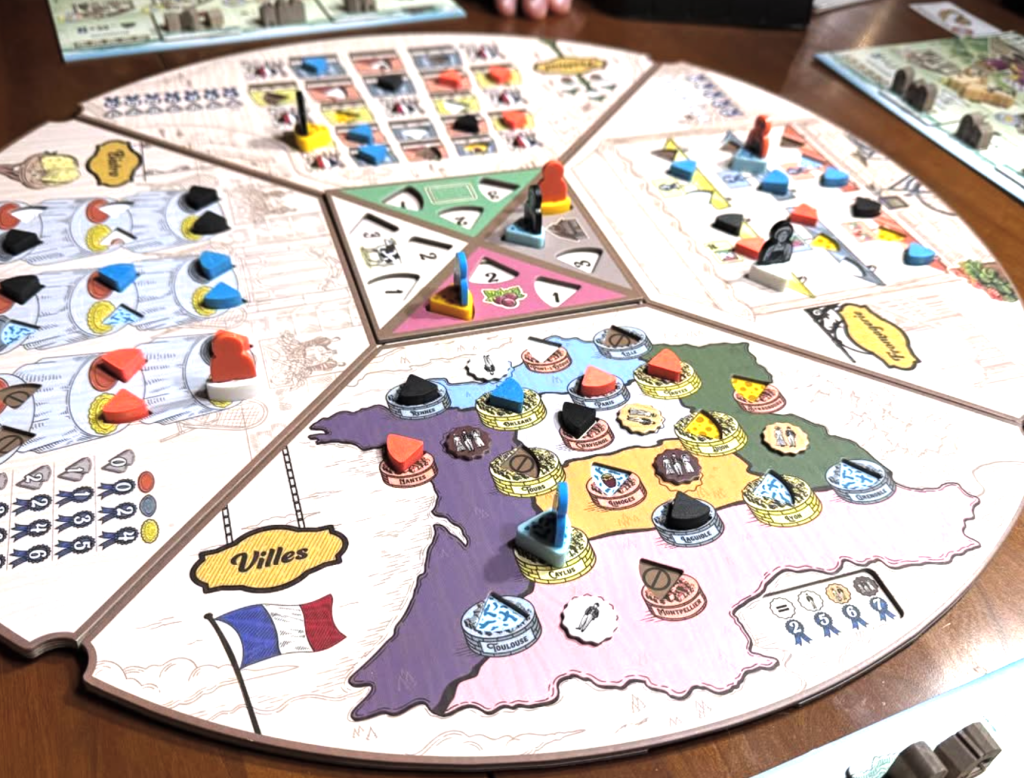
The design of Fromage is interesting to consider with this particular lens. The game features a rich central board packed with lots of information and nuance. The game uses a simple mechanic that is both thematically appropriate and mechanically extremely friendly to the form factor of the game. The board is divided into 4 regions, and it rotates to face the players. On a given turn, you are only concerned with the portion of the board directly in front of you. In this way, the game naturally brings the complexity to you, orients it in an upright fashion and ensures you have full access to all the details needed to make your choices.
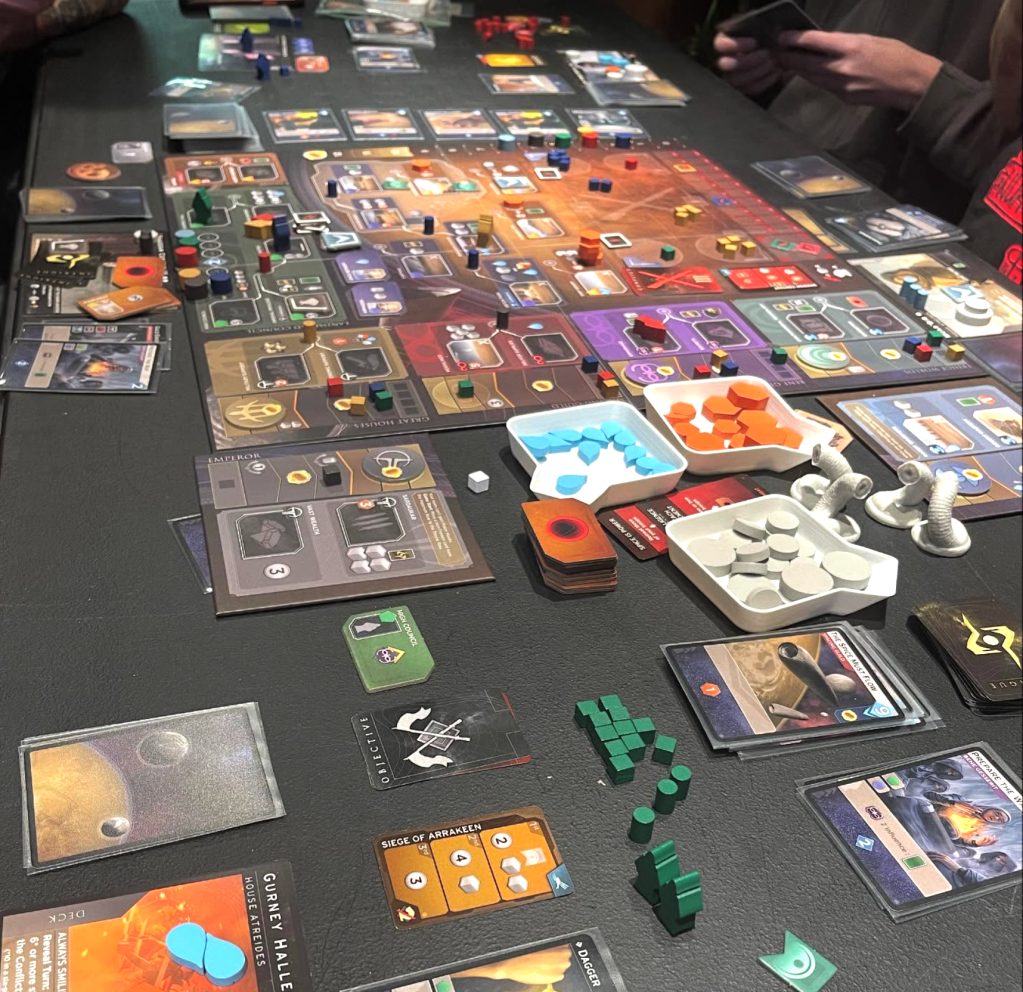
In contrast to Fromage, Dune Imperium also features a rather complex board, but does not offer the convenience of the rotating board found in Fromage. From my perspective in this particular game, you can see the market of cards I can purchase from at the very top of the image. It is very far away, and I have to ask for the cards to be passed to me. This makes it very hard to maintain an understanding of what is there and how important it might be to skip to that phase early.
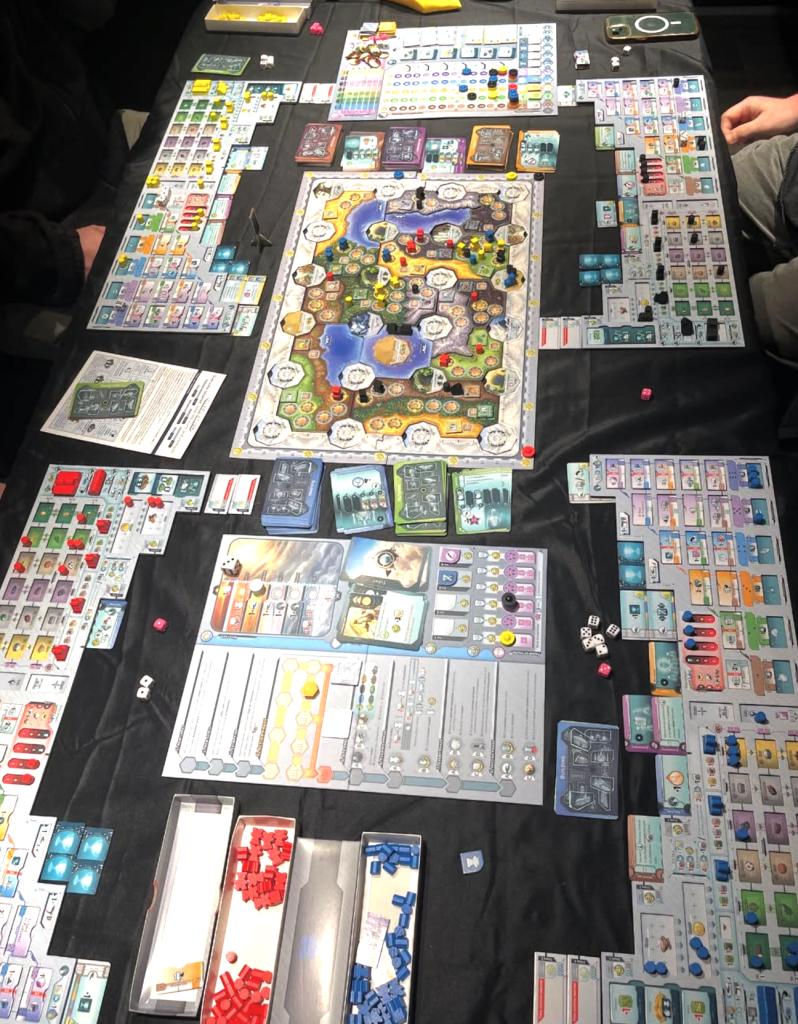
Civolution is another game with a massive footprint. This inevitably makes the far end of the board really hard to see and internalize. In this game, I recall that it was easy to lose track of and forget what was going on at the other end of the board.
Conclusion
None of this is suggesting that games with out-of-reach regions are poorly designed. In fact, many people love this type of game and are very skilled at keeping all of these things in mind as they play. But it does come at a cost, and there are many players who will struggle with this. The real point here is to consider how and where complexity lies and what burden you are putting on players. As you design, consider if players can physically reach things and how those elements might be adjusted to reduce the burden on the player.
