
As a board game designer, you aren’t just building systems; you’re managing the player’s cognitive load and creating an experience. Whether you’re teaching a complex ruleset or pacing a two-hour epic, you are constantly battling the limitations of human memory. One of the most persistent hurdles you may not even be aware of is known as the Serial Position Effect.
This psychological quirk suggests that our brains are wired to prioritize the “anchors”: we remember the beginning (the Primacy Effect) and the end (the Recency Effect) of a sequence with excellent clarity, while the middle tends to blur into a hazy “sag.” For a designer, this isn’t just a fun trivia fact; it’s a roadmap for player experience. I feel like I encounter this every time someone teaches me a new game: the first and last things stick, while the “stuff” in the middle gets pretty confusing. The reality is that you aren’t just fighting the competition; you’re fighting the way your players’ brains actually work.
In this article, we’ll look at how to use these memory anchors to create tighter experiences and more impactful games that stick with players long after the box is closed.
Legacy Games
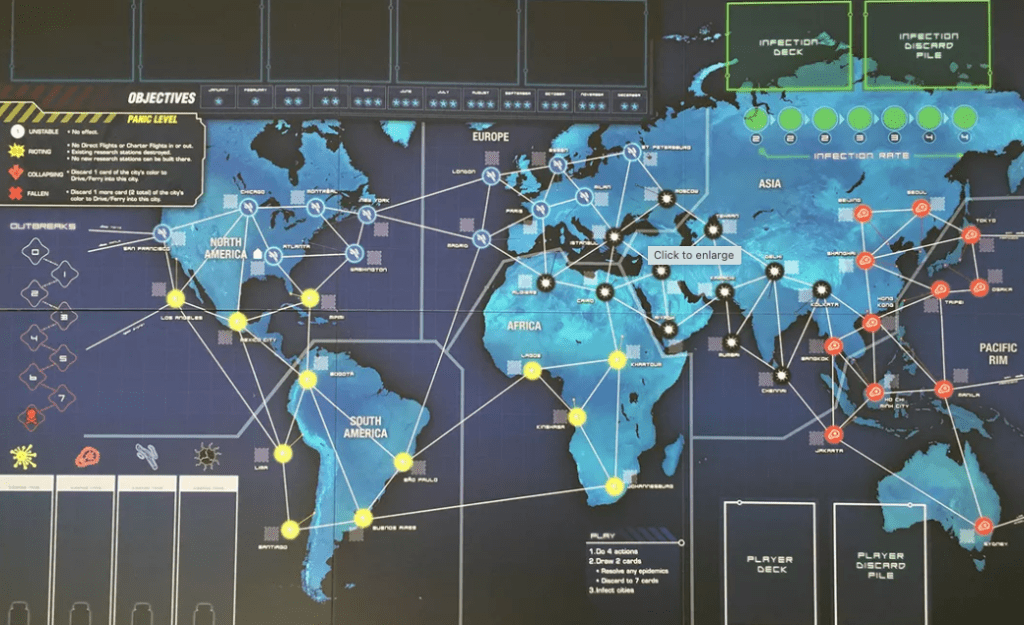
Legacy games are a very interesting game type to consider for the Serial Position Effect. Naturally, every game has a start and an end, and those are the most remembered parts of a game. But what about legacy games? When does a new game start and end? Sometimes that line is a little blurry, sometimes it’s fairly clear. Looking at a game like Pandemic Legacy, what marks those starting points? Obviously, when you start a new year (or even repeat a year), you have a starting point. But the real trick is that you get to open a box of goodies. That experience feels a lot like the first time you open a new game. I have yet to find anyone who didn’t love the moment of opening a new box and starting a game with new rules or components to interact with. These mid-campaign starting points are perhaps one of the primary reasons a legacy game keeps players interested.
Mid Game Events
Some games have what I would call a fairly monotonous mid game. Take for example Axis and Allies. I love this game and have played it hundreds of times over the last 4 decades. However, the mid game is very repetative and void of built in markers that spark a new start kind of feeling. The begining is always exciting and full of posibilities, and the last moments are filled with mountains of chips (troops), clashing in epic battles where you roll way too many dice.
Some games deal with this long, repetative mid game slup by building in special events that create excitment and tension as they approach. In a way this turns one long game into a series of mini games that are connected. And with more exciting events the overall excitment level of the game is elevated.

A great example of this Mosaic: A Story of Civilization. In this game there are several mid game scoring events. You don’t know exactly when they will happen, but you tend to sense it. You know when it has to be getting close. This keeps the presure on to always be ready for scoring and to maximize your position on the board every chance you get. Then the scoring happens, and the table better understands who the leaders are. It’s an exciting moment that defines a new start point to remember.
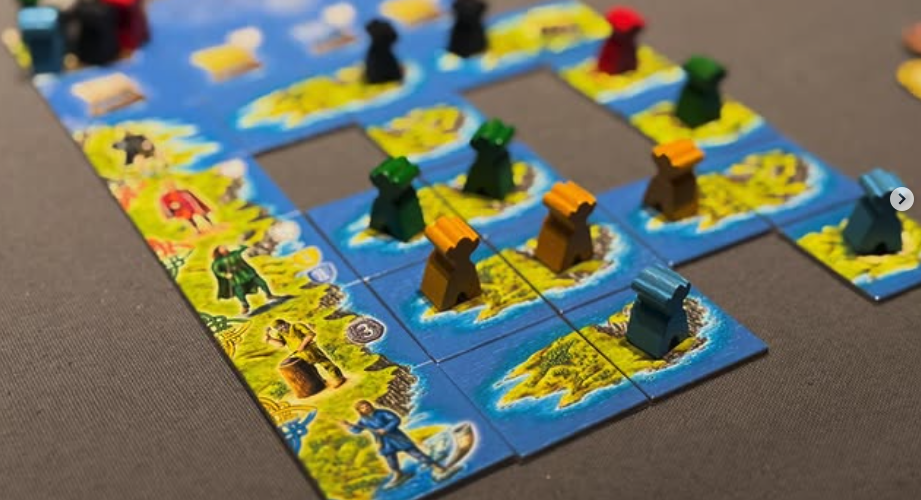
I recently played Vikings; a neat little tile placement game. In this game you play 6 rounds that are all 100% the same. I suspect that in testing it had a significant slump in the middle part of the game. The fix to this is very apparent; every other round you do a “large” scoring event. This means that you feel the pressure to have your board in a good state, you can’t put off blocking raiders for example to the end of the game. You want to block them early so you can score points. This pressure makes the game more memorable, and the scoring events create new start/stop points to recall and enjoy.
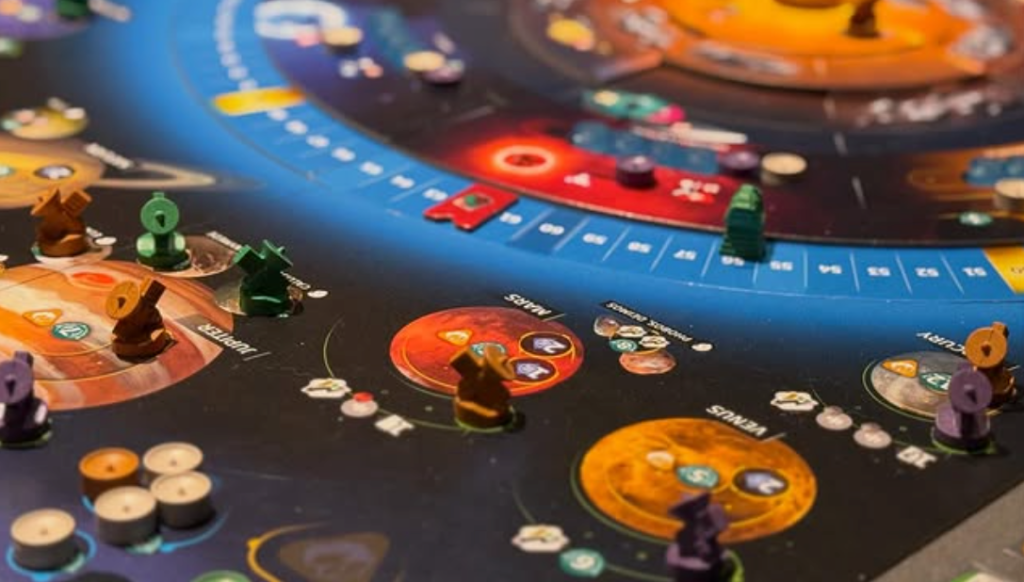
SETI: Search for Extraterrestrial Intelligence is another great example of how this principal can be put to work. In the game you are searching for alien life. There are two mid game points where you discover the aliens. The neat thing is that during setup you randomly selected two secret aliens to be revelaed later. This means you get the excitment of discovering which alien you will be encountering. These moments are anchored as exciting stepping points in the mid game.
Conclusion
As a designer, you should look at your game’s timeline as a “U-shaped” curve of engagement. The peaks are your intro and your finale. To keep the middle from sagging, you must insert “Mini-Anchors”—new rounds, new phases, or dramatic reveals—that trick the brain into thinking a new “beginning” has started.
