

When a game’s rulebook needs an FAQ section, it’s essentially admitting that the rules weren’t clear enough the first time around. FAQs exist to patch holes in explanation, clarify ambiguous wording, or address edge cases that the original rules didn’t adequately cover. While publishers often add FAQs to be helpful, their presence signals that players are predictably getting confused or stuck on the same questions repeatedly. This creates a frustrating experience where players must not only read the rulebook but also check a separate section to understand how the game actually works, breaking the learning flow and undermining confidence in the rules as written.
The root causes of FAQ necessity usually fall into a few categories: ambiguous language that can be interpreted multiple ways, insufficient examples showing how rules apply in practice, poor organization that buries important information, or genuine gaps where the rules simply don’t address certain situations. Each of these represents a failure in technical writing and game design documentation. When players encounter an unclear situation during gameplay, they shouldn’t need to hunt through an FAQ—the answer should be readily apparent from the rulebook’s main text, supported by clear examples and comprehensive coverage of edge cases within the natural flow of explanation.
Avoiding FAQs requires intentional effort during rules writing and development. Thorough playtesting with fresh eyes reveals where confusion occurs, allowing designers to preemptively address those questions in the main rules. Clear, unambiguous language eliminates multiple interpretations. Comprehensive examples show rules in action rather than leaving players to extrapolate. Strategic organization places related information together and uses visual hierarchy to make lookups efficient. Some games employ glossaries or reference sections to centralize definitions and edge cases, integrating potential FAQ content directly into the rulebook’s structure. The goal is making the rulebook complete and clear enough that an FAQ becomes unnecessary because players can find definitive answers within the primary text.
Rebellion

Rebellion takes a sophisticated approach to avoiding FAQs by including a comprehensive glossary book as a secondary reference alongside the main rulebook. Rather than trying to cram every possible term definition and edge case into the tutorial-style learn-to-play rules, the game separates concerns: the main rulebook teaches you how to play, while the glossary provides exhaustive alphabetical definitions of every game term, card type, and mechanic. This organizational structure means that when players have questions about specific terminology or how particular abilities interact, they simply look up the term in the glossary rather than hunting through the rulebook or consulting an FAQ. The glossary entries are detailed and cover edge cases directly within each definition, addressing potential confusion before it requires an external FAQ document. This approach works particularly well for complex games with extensive terminology because it acknowledges that players need quick reference for specific terms without cluttering the learning experience with every possible detail upfront.
Wingspan
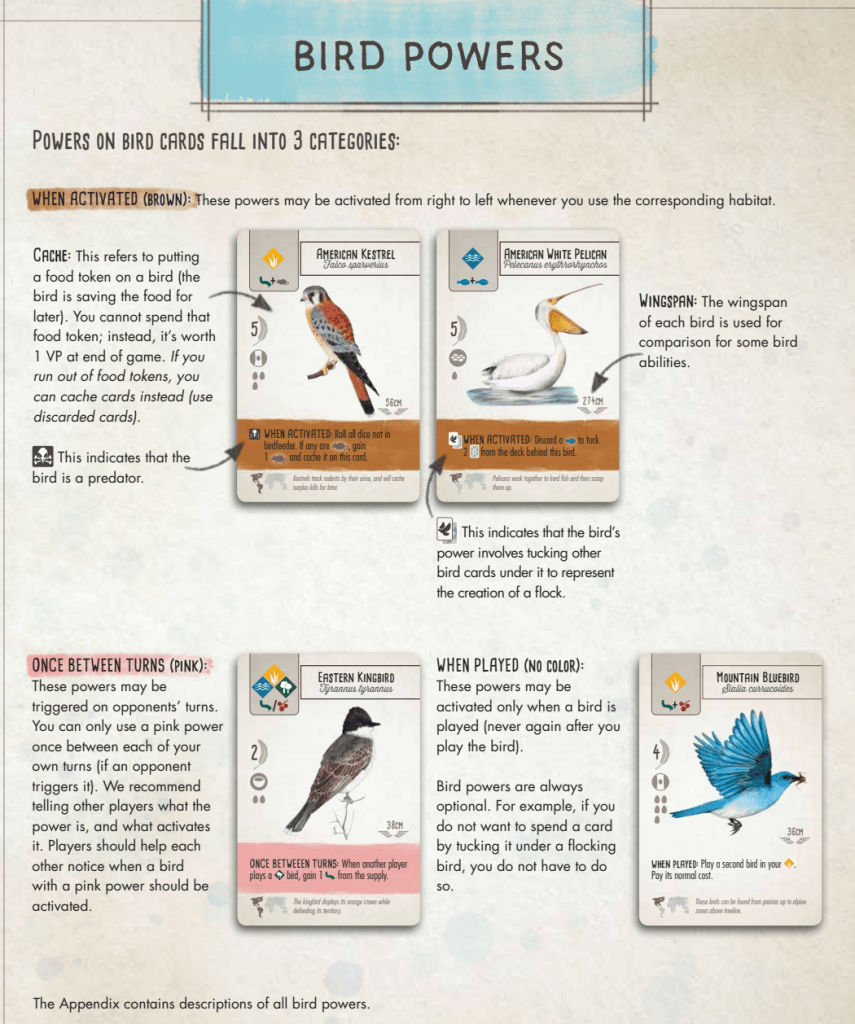
Wingspan avoids needing a separate FAQ by building potential questions directly into its rulebook appendix, which includes an “Automa Clarifications” section, a detailed component list, and most importantly, a card-by-card clarification section that addresses potentially confusing bird powers. Rather than waiting for players to get confused and publish an FAQ later, the designers anticipated which cards might cause questions and proactively included clarifying text in the rulebook. When players encounter a bird card with unusual timing or interactions, they can reference the appendix by card name to find specific guidance. This preemptive approach means the rulebook itself contains the answers to questions that would otherwise populate an FAQ, integrated naturally into the reference material players already consult. The appendix format keeps this detailed information from cluttering the learn-to-play section while ensuring comprehensive coverage of edge cases.
Pandemic Legacy
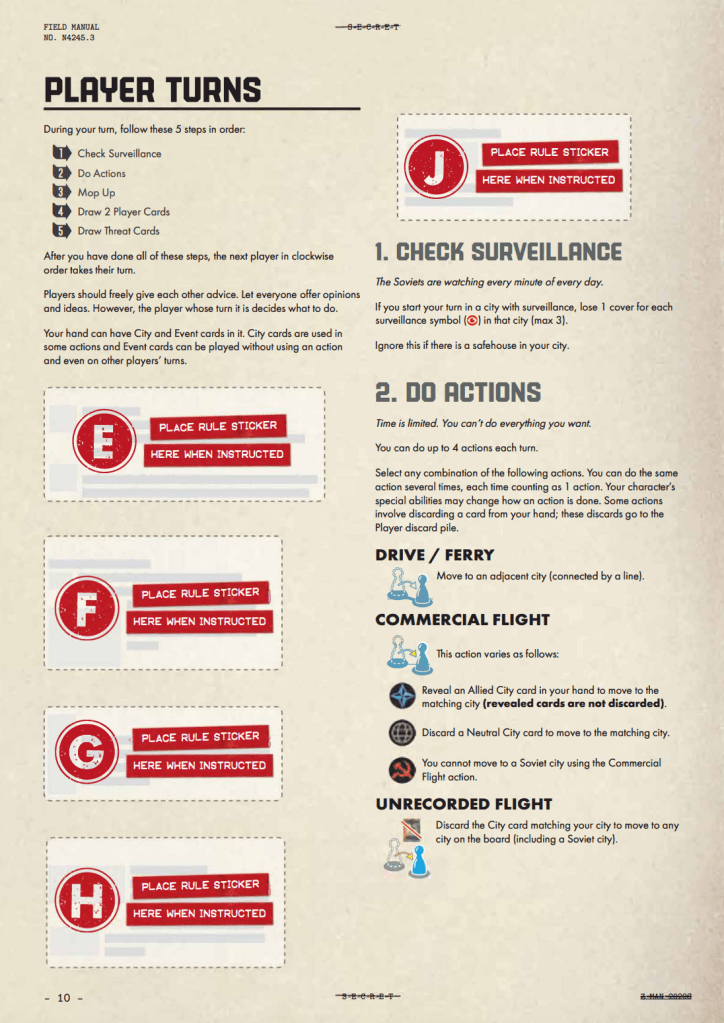
Pandemic Legacy avoids the need for an FAQ through its unique evolving rulebook approach, where rules changes are integrated directly into the rulebook using stickers and additions as the campaign progresses. When players unlock new mechanics or rule modifications, they physically add those rules to the appropriate section of the rulebook, ensuring all active rules are consolidated in one place without requiring cross-reference to separate documents. The legacy format means the rulebook is always current and complete for your specific game state—if a rule has changed or been added, it’s now part of your rulebook, not buried in an FAQ. This approach handles rule additions by evolving the primary document rather than creating satellite FAQ materials that players must remember to consult.
Cartographers

Cartographers avoids FAQ problems by including extensive visual examples directly in the rulebook, showing completed map sheets with step-by-step scoring calculations for each scoring card. The rulebook doesn’t just explain scoring rules abstractly—it shows multiple examples of filled-in maps with annotations pointing out how each terrain type scores, how shapes are counted, and how penalties are calculated. Each scoring card type gets its own visual example demonstrating how that card evaluates maps, addressing potential confusion about pattern recognition before it arises. By providing visual proof of how scoring works rather than relying on text descriptions, Cartographers ensures players can refer to concrete examples when questions arise, eliminating the need for FAQ clarification.
Dominion

Dominion avoids FAQ necessity by making each card’s text the complete and authoritative rule for how that card works, combined with a rulebook that establishes clear timing and interaction principles. The rulebook teaches the basic game structure and introduces fundamental concepts like “you may” versus “must,” “+1 Action,” and card interactions, then lets individual cards define their own specific behaviors through their printed text. When players have questions about what a specific card does, the card itself contains the answer—there’s no need to cross-reference the rulebook for most card-specific questions. The few edge cases about timing and card interactions are addressed in a dedicated “Additional Rules” section that covers principles like “play cards in any order” and “effects resolve completely before the next effect.” This structure means the rulebook establishes the framework while cards are self-documenting, eliminating most potential confusion that would require an FAQ. The game’s expansions maintain this principle, with new cards being complete rules unto themselves within the established framework.
Conclusion
The absence of an FAQ in a rulebook is a mark of quality technical writing and thorough game development. By anticipating player questions, writing with clarity and precision, providing comprehensive examples, organizing information logically, and addressing edge cases within the natural flow of rules explanation, designers can create rulebooks that stand on their own. Whether through glossary approaches that centralize definitions, appendices that proactively clarify complex interactions, visual design that makes rules observable, consistent formatting that facilitates lookups, or exhaustive coverage that leaves no questions unanswered, the goal remains the same: players should find complete, clear answers within the rulebook itself. When a game achieves this, it creates a smoother learning experience, builds player confidence in the rules, and demonstrates respect for players’ time by getting it right the first time.
