
Mechanics in games that give players a sense of achievement are crucial for creating satisfying player experiences. These mechanics tap into fundamental psychological needs for competence and progress. When players feel they’ve genuinely earned their successes through skillful play, it creates positive reinforcement that elevates the experience. This sense of achievement transforms mechanical interactions into emotionally rewarding moments, distinguishing memorable player experiences from forgettable ones.
There are many ways that games can create this feeling of achievement. Outlined here are some games that use mechanics such as: narrative progress, customization, optimization, strategic crafting, and bold risk-taking. Let’s take a closer look at some games to see how this works.
Ticket to Ride
Ticket to Ride creates achievement through its route completion system, where players earn points by connecting distant cities across the map. The mechanic rewards both short-term tactical decisions and long-term strategic planning, as players must balance claiming immediate routes and collecting cards to complete them. Successfully completing a cross-country railway creates a great sense of accomplishment. One’s progress in the game is visible, making the sense of accomplishment very tangible.

King of Tokyo
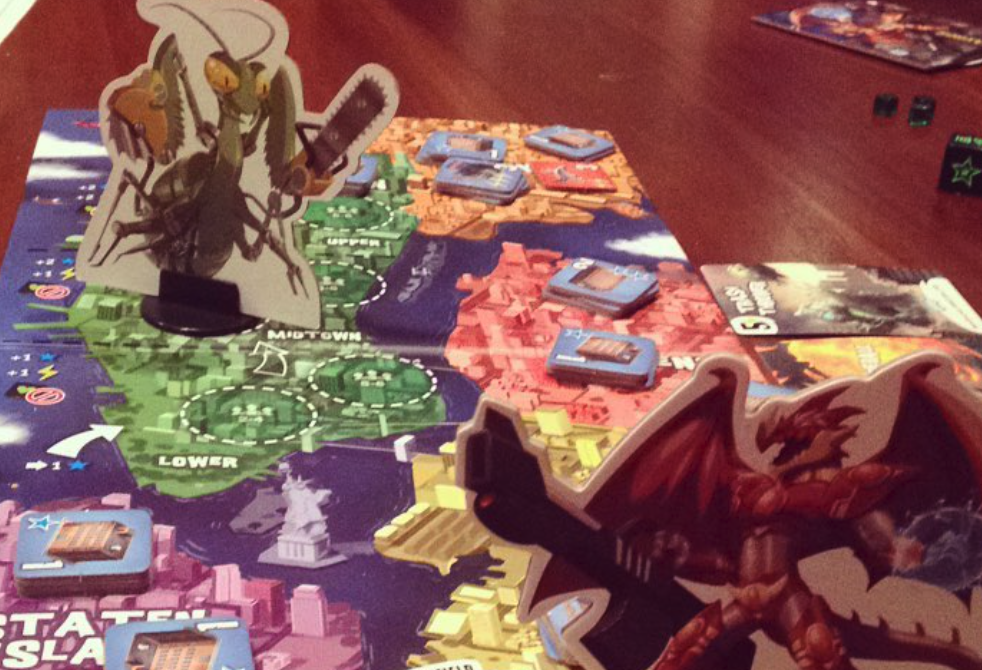
King of Tokyo drives achievement through its monster evolution mechanics, where players purchase upgrades that permanently enhance their kaiju’s abilities throughout the game. Creating a customized monster that reflects the your own strategic preferences makes your monster feel personal and earned. This customization leaves room for players to find wild combos and unexpected results. When those combos work the player feels clever and smart.
Splendor
Splendor generates achievement through its economic engine-building, where players gradually acquire gem mines that can be used to buy even more of the same. The game’s satisfaction emerges from recognizing efficient purchasing chains and watching small initial investments compound into significant advantages. Players experience genuine accomplishment when their early strategic choices culminate in effortless high-value acquisitions, creating a player experience where mathematical optimization feels rewarding and accessible.

Dominion
Dominion delivers achievement through its deck-building progression, where players start with identical cards but gradually craft powerful, personalized engines through strategic purchases. The satisfaction lies in recognizing card synergies and building combinations that generate explosive turns, transforming a sluggish early game into an efficient late-game machine. Each game becomes a puzzle of optimization where players feel genuine accomplishment from constructing a deck that reflects their strategic vision and executes their intended game plan.

Euchre
There are numerous trick-taking card games, many of which include a single feature that really evokes the sense of accomplishment. In Euchre, this high-stakes moment is when players “go alone” by declaring they’ll take all five tricks without their partner’s help. This bold move transforms a collaborative card game into a solo performance where success depends on perfect card reading and execution. The achievement comes from the courage to attempt such a risky declaration and the skill required to follow through, creating intensely memorable player experiences where triumph feels both daring and masterful. It’s the kind of thing that is both annoying to lose to but also so fun to watch happen.

Conclusion
Successful game designers create achievement-oriented mechanics with layers of accomplishment that cater to various player motivations. They combine immediate micro-achievements with long-term macro-achievements, ensuring that accomplishments feel earned through skill rather than luck. Providing clear feedback and meaningful choices regarding achievements, while balancing difficulty and opportunity frequency, helps maintain player satisfaction and challenge.
