
The Zeigarnik Effect, named after psychologist Bluma Zeigarnik, describes the human tendency to remember unfinished or interrupted tasks better than completed ones. This happens because an incomplete task creates a state of mental tension and cognitive dissonance, which keeps the task active in our working memory. Once the task is completed, this tension is relieved, and the details of the task are more easily forgotten.
This effect has been observed in various contexts. Zeigarnik first noticed it when she observed a waiter who could remember unpaid orders but immediately forgot them after the customers had paid. In modern applications, this principle is widely used in User Experience (UX) design, where it’s leveraged through progress bars, checklists, and cliffhangers to encourage users to complete a process or return to an app.
The Zeigarnik Effect can be a powerful tool for board game designers. By creating systems that leave tasks feeling slightly incomplete, designers can build a natural psychological pull that keeps players engaged. This could be as simple as leaving a player one resource short of a powerful action, or as complex as a long-term quest that requires multiple sessions to complete. These “open loops” motivate players and make them eager to return.
Let’s look at some games that make use of the Zeigarnik Effect.
Gloomhaven
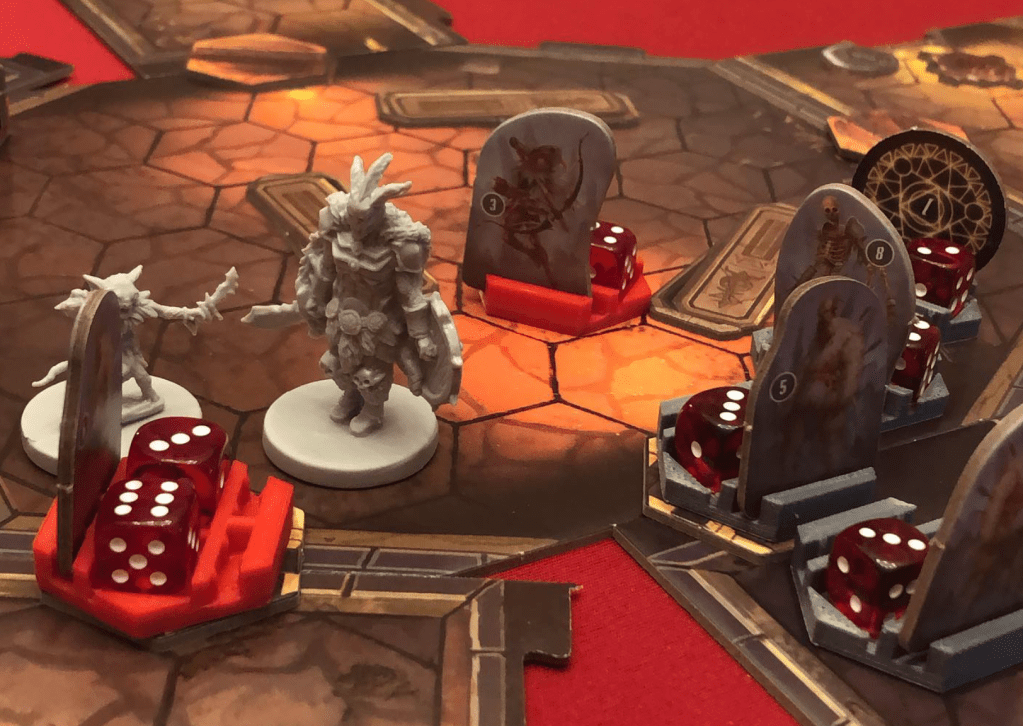
As a massive legacy campaign game, Gloomhaven is built on the Zeigarnik Effect. Players undertake quests that span multiple sessions, often leaving a scenario mid-way through a dungeon or with a long-term goal only partially fulfilled. The game’s intricate personal quests and story missions create “open loops” that are designed to feel incomplete, motivating players to return and see the story to its conclusion and earn their final rewards.
Everdell
This engine-building game uses the Zeigarnik effect with the basic structure players are attempting to complete. The goal is to finish your city of cards in a 3×5 layout. This sets up an incomplete structure from the start of the game. Each turn you are attempting to move closer and closer to finishing your city.

Azul
This abstract strategy game uses the Zeigarnik Effect in its core tile-laying mechanic. Players are always working to complete rows on their personal board. As you collect and place tiles, you can see the rows that are almost complete, perhaps with only one or two spots remaining. This visual sense of an incomplete pattern creates a powerful drive to get the final tiles you need to finish the row and score points, leaving you eager to complete the next one.

Tapestry
The game’s main action involves advancing up a multiple “civilization tracks,” where each step offers a different bonus. The tracks are laid out with a series of empty spaces and rewards, creating a clear visual path of progression. The player is always working toward the next major benefit or the final spaces on the track, which creates a strong feeling of an uncompleted journey that motivates them to spend resources to continue their advancement.

Pandemic Legacy
As a legacy game, Pandemic Legacy uses the Zeigarnik Effect through its overarching story and long-term goals. Each game session ends with the world still under threat and new mysteries revealed in the legacy deck. The unresolved plot points and the feeling that you have only put a temporary stop to the spread of disease create powerful “open loops” that compel players to schedule the next game session to continue the story and see if they can finally save humanity.

Conclusion
Once you notice this effect you will see it in countless games, nearly every game it would seem. As I reflect on my own game design that have failed or succeeded, I am often noticing that games without an open loop or incomplete element are the worst ones. When I started researching this topic I thought it would be hard to demonstrate, but now I am almost thinking it drives right at the core of what makes a game fun.
Ultimately, the Zeigarnik Effect isn’t about frustrating players with unfinished business; it’s about using this principle to drive engagement. When executed well, this effect transforms a game from a mundane into a compelling series of satisfying tasks that players are eager to return to, making the entire Player Experience more memorable and rewarding.
