
Good game design extends beyond rules and mechanics; it’s also about a game’s physical form. When players can easily handle pieces, read text, and understand visual cues without confusion or frustration, the game’s User Experience (UX) is enhanced. This is the difference between a game that feels intuitive and one that feels like a chore. The best physical components don’t just look good—they actively support the game’s purpose, making complex interactions simple and the entire Player Experience (PX) more fluid.
Project L
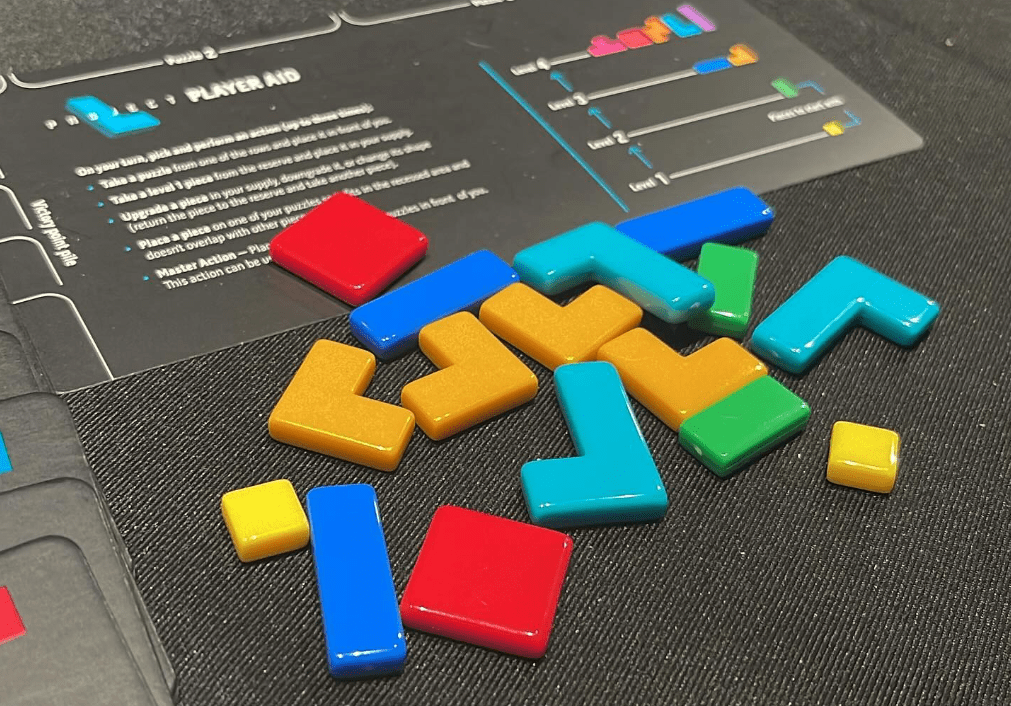
The two main components in Project L are very well designed and are super easy to interact with. First, the Tetris like shapes are sufficiently sized that they are not hard to pick up. Secondly, the cards you put the pieces onto are dual layered and therefore hold the pieces in place extremely well. This keeps things nice and tidy and makes it very easy to interact with. Finally, the pieces aren’t “stuck” into the boards, they fall out when you turn them over. All of this combined makes this simple game a breeze to play and lets players focus on their strategy and not fiddling with tiny bits.
Spirit Island
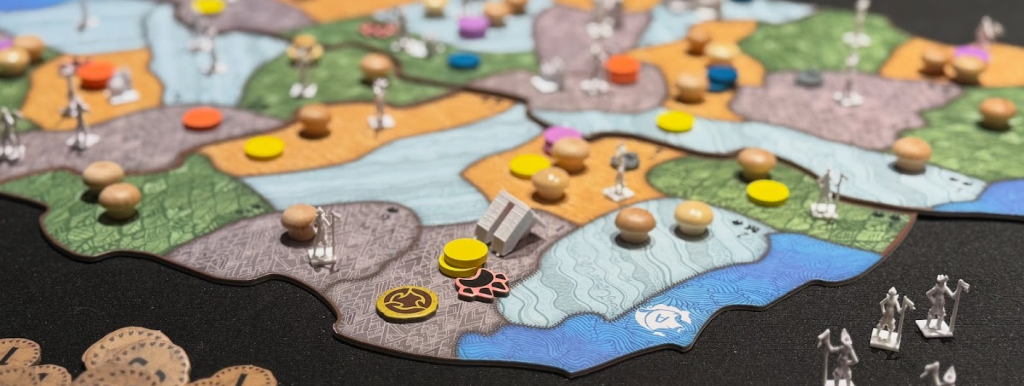
Spirit Island is a great game, and for the most part the components are easy to handle. However, there are a few exceptions. The thin wooden discs and the thin card board bits can be a real pain to pick up. As I age I find myself more and more sensitive to this. It is very real that fine motor skills diminish over time. Fumbling for bits and trying not to knock things out of place takes the fun out of the game.
Marrakesh
Marrakesh is another game with small wooden bits. However, in this case they have two key improvements over those in Spirit Island. First off, the bits are small, but they are tall and therefore rise up off the table. This makes them vastly easier to pick up. Second, the player boards are double layered and it allows you to easily slot in your tokens without fear of messing up any previous ones. If these tokens had been thin discs, or tiny cubes it would have been a major pain to handle.

Tiny Epic Game of Thrones
Tiny Epic Game of Thrones might be a game that comes in a tiny box, but they by no means skimped on the components. I imagine it was very tempting to use much smaller tokens. Fortunately they opted for large, easy to handle tokens. This is such a key to making the game work. I think this is actually one of the most important keys to this line of games. They know when to make things small, and they know when not to. The result is a pleasing experience free of annoying pieces.

Colossal Cat in the Box
There is a standard version of Cat in the Box, and even a deluxe version. But the one I want to focus on is the Colossal version. This version uses absurdly large bits. The story goes that they made this version to demo at events because it looked neat, was easier to see, and generally was easier to interact with. Well guess what, those are all things people want. So while I know the Colossal version is much more expensive, heavier, and takes up way too much space for what it is, I still love it. The components in this version truly make the game easy to play and a joy to interact with.

Conclusion
This topic is another one where play testing should quickly reveal any problems. Testing a game with it’s final components is so important, but might be easy to short change. If you observe players fumbling with bits, or struggling to keep things in place its a sure sign that they need some supports to reduce the problem. Things like chunky components and double layered boards aren’t just for aesthetics, they have very real usability aspects to them that can make or break the player experience.
