

With this lens, we are considering how turns in a game increase in impact and importance as the game progresses. Often, this culminates in big and exciting turns to end the game. Not all games have this; some go at an even level the whole way through. Others grow and almost spiral towards being too powerful and breaking the game. And that is just when the game ends, right on the cusp of blowing up. This heuristic proposes that this escalation is good and something worth pursuing in our game designs. In fact, it leads right into the idea presented in the Peak End Rule. In a way, it pushes both of these to the same spot. Games that end like this tend to be exciting, stand-up-at-the-end kind of experiences.
Castles of Burgundy
In Castles of Burgundy, there is a mechanic that says you get points for filling up a colored region. So in the image, for example, if you filled the four yellow regions at the top left of the board, you would get a reward. That reward is greatest in the first round of the game and diminishes as the game progresses. However, because players are growing and accumulating resources, special powers, and so on, the turns definitely grow in impact. So while this reward shrinks, the growth of other opportunities rises, and the game has a sense of increasing importance. In a way, this early reward helps to ensure the game doesn’t have a dull start. But because it fades away as the players build up an engine to do bigger and better things, the impact grows, and the desire for just one more turn takes over. You will want to squeeze all you can out of the game before the final turn comes, and you will be wishing you just had a little more time. In this way, the turns increase in impact and make for a great ending.

Mosaic: A Story of Civilization
Mosaic does some things very similar to Castles of Burgundy. At the very start of the game, there is typically a blitz to try and grab some very valuable early goals. Each is worth 6 points, which is a significant amount of points. This gives the early game an exciting race to grab those. There is typically a remaining set of goals that take longer but score the same. These are important to shoot for but often lose focus as more lucrative options present themselves. Outside of those big rewards, players have little ability to earn points early on. But as the game progresses, this increases. At the end of the game, you might be able to score as many as 10 points on a single turn, which is absolutely huge. This game has a unique game end element where scoring cards emerge from the various decks. Once three have occurred, the game is over. In this way, the exact ending is unpredictable and players often find themselves carefully balancing how quickly they can earn points vs how many points they can get. It leads to exciting ending turns that can get quite long. But it is totally worth it as the excitement builds and the turns grow in impact.

Scout
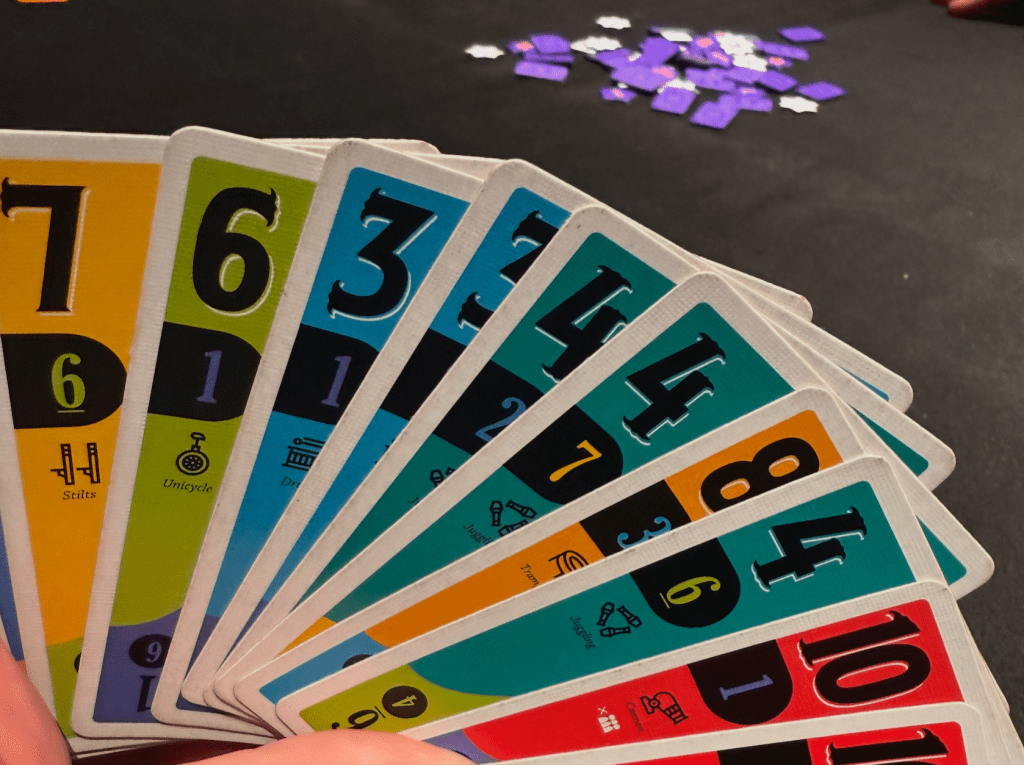
Scout is a game that does not portray this feature. Turns do not increase in scale or impact as the game progresses. Each of the rounds is exactly the same. While this is perhaps a downside to the design, the game is overall very clever and fun to play. I only present it as a contrast to these other games. In Scout, every round is the same, and the tension or importance that might emerge is based on how players are scoring. But the impact of your turns totally depends on your cards. In this way, an early round might be more impactful than a later one, and this can vary per player. These unexpected peaks create a sense of the unknown as you worry other players are going to flop down a huge set and end the round, sticking you with lots of cards left in your hand. It’s a different kind of tension than this metric is looking to reflect.
Conclusion
When thinking about this metric, look for ways you can have turns grow in importance, but as we have seen, ensuring early turns have significant meaning is also important. If the entire game is about the last turn, why did you bother to play all those other turns? So while things should grow, they should not start with zero impact. In fact, many of the best games have early importance, lag a little in the mid-game, and then scale to big dramatic endings.
