
The Peak-End Rule means that people remember an experience mainly by how they felt at the best point and the end, not by considering every moment equally.
With this in mind, it is wise to carefully consider what the experience is like at its “peak” and then what it’s like when it ends. A good example of this is the two different kinds of experiences I have had while traveling. The first is Disney World. It is likely no surprise that we had a great experience there. When I think about the “peak” of that experience, it had to have been one of the rides; it’s not too important which ride specifically. What’s interesting is that the high point is closely connected to the worst part: waiting in lines. But this is something they have worked really hard to mitigate. Between interesting things to do while in line and the ability to reserve slots so you can avoid the line, they have really worked so that these peak experiences of riding the rides are as good as possible.
Now if we consider the end experience you get another interesting set of strategic choices. First, at the end of every day, they do a big fireworks and lights show. Combined with a parade of all the characters, this makes for a really exciting endpoint. The kids are excited, parents are finally resting and content. It’s a truly magical ending.

After the show is over though you still have to leave. Fortunately, much of that enthusiasm carries you to the gate. And along the way, you get farewells from the characters and a last chance to stop in all the best shops by the entrance. It is amazing that they made the end of the day a fantastic experience.
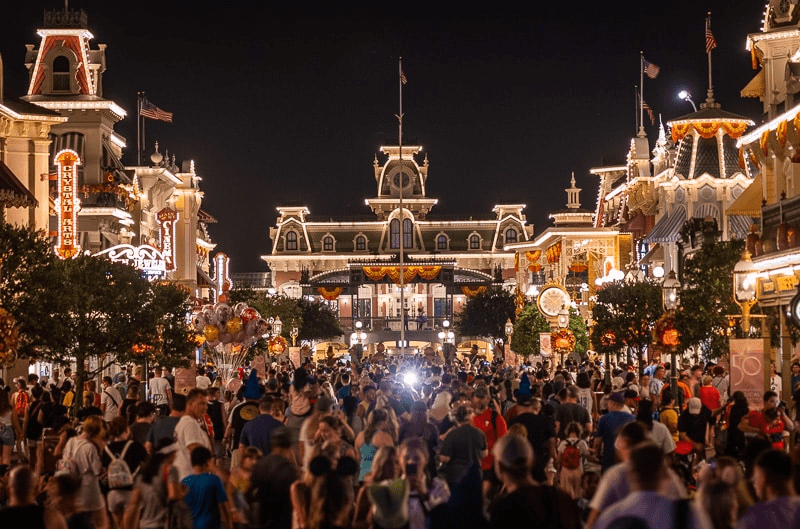
I hope that you can see how much effort they put into those peak and end experiences. Those highlights really stand out and leave a positive impression, making you want to return.
Another recent experience I had wasn’t quite so great. We visited Liberty Island to see the Statue of Liberty. It is truly an amazing experience, and the peak was getting to climb the stairs to the top. We will not forget the experience, and we are so thankful we got to do it. So the “peak” experience was great, which is not so true of the last experience. When you go to leave the island, you have to board ferries to get you back. The “line” is really more of a mob, and if you don’t pay attention, people will just flow right in front of you, and you will never get off the island. Even worse, many people just walk right to the front and crowd, bypassing the entire line. It was such a frustrating and stressful experience that took nearly 2.5 hours to get through. Guess what our lasting impression of this experience is? “Never again.” We simply won’t return, ever. In fact, when we tell people about going, this is the first and main part we relay.

Does your game have a peak experience? What could you do to give it one? Does your game end with a “meh” kind of feeling, or does it go out with a huge dramatic experience? If you lack these highlights, you should probably carefully assess your design to see how you might layer them in.

One response to “Peak-End Rule”
[…] worth pursuing in our game designs. In fact, it leads right into the idea presented in the Peak End Rule. In a way, it pushes both of these to the same spot. Games that end like this tend to be exciting, […]
LikeLike