

When a board game’s physical form actually reinforces the rules, it can feel so amazing. This inevitably makes the game more intuitive to play, easier to learn, and easier to remember how to play. All important elements in creating a positive player experience. What does this actually look like though?
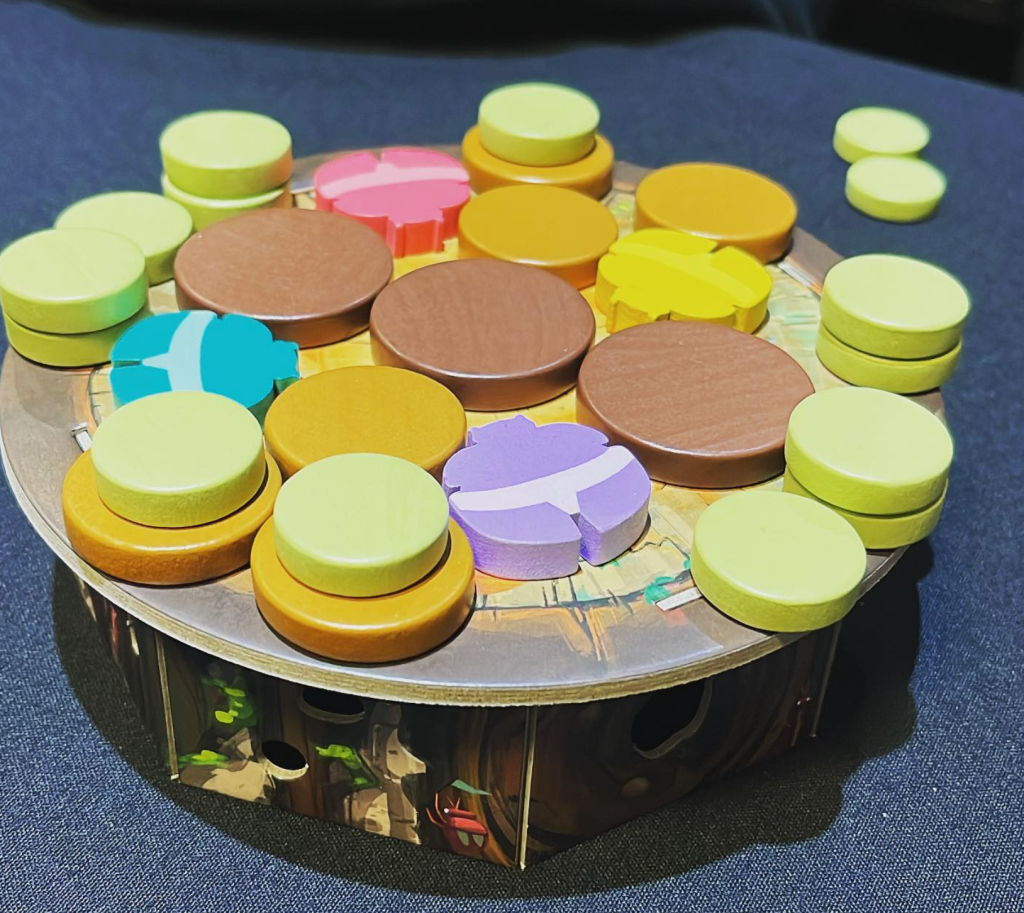
A great example to start with is Kabuto Sumo. In this game, players slide discs onto the arena to try and push their opponents off. I imagine this started as a flat game, without the elevation. This would lead to special rules about when a piece is considered “out of the circle.” Instead, the game uses an elevated circle, and a piece is considered “out of the circle” when it falls off. This 100% eliminates any gray areas or arguments and is instantly understood. In this way, the physical form of the game reinforces and even creates the rule. It also adds a bit of drama to the game as players ride the edge or finally tip over and fall off.
Fromage is a rather unique worker placement game in that it uses a rotating board. All play is simultaneous, and each player can only interact with the “wedge” in front of them. This is one way the physical form reinforces the rules, but there is more. Each turn, you recall workers that are facing you since they rotate with the board. This means that some jobs take longer than others. Finally, the wedge shape slots you use on the board ensure that you don’t misinterpret things. As such, it really is nearly impossible to mess up while playing thanks to the physical form of the game.

Another common approach to using the physical form to reinforce the rules is found in Scythe. Players fill their board with tokens at the start of the game. Throughout the game, these tokens are moved to the main board. When some tokens are moved, they reveal a small bonus that the player gets. This small detail allows the game to have very specific little benefits without any extra rules to worry about. It turns a tedious rule into a natural one.

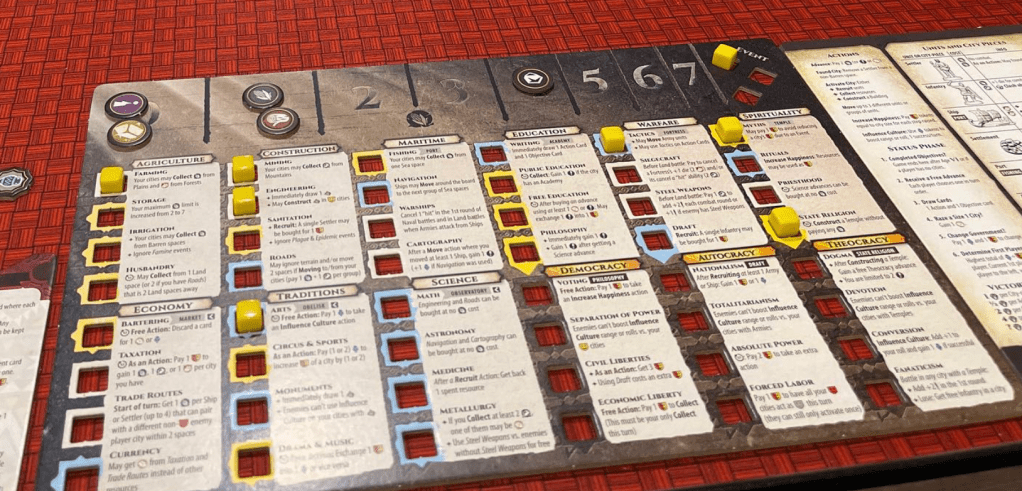
In the game Clash of Cultures, players can never have more than 7 of each of the main 5 resources in the game. You can see this limit in the track at the top of the player board shown below. This small detail reinforces a rule that would be easily forgotten. Right next to it is a track with 3 holes for cubes. Once all 3 have been used, an “event” is triggered. This also is a clever way to have the game’s physical form reinforce the rules. Instead of having to track when you have used 3 more cubes, the board does that for you and reminds you to trigger an event card.
A game that uses its form to reinforce its function in a rather unusual way is Shaky Manor. In this game, each player has a tray full of various bits, as shown below. The goal each round is to shake your tray (i.e., haunted house) until the correct combination of bits is in the correct room. It’s a silly game, to be sure. But when you get the tray, you instinctively know what to do. It just makes sense. Many games that almost become toys have this quality to them. Is there a way to turn some element of your game into a physical experience like this so it’s natural and obvious how to use it?

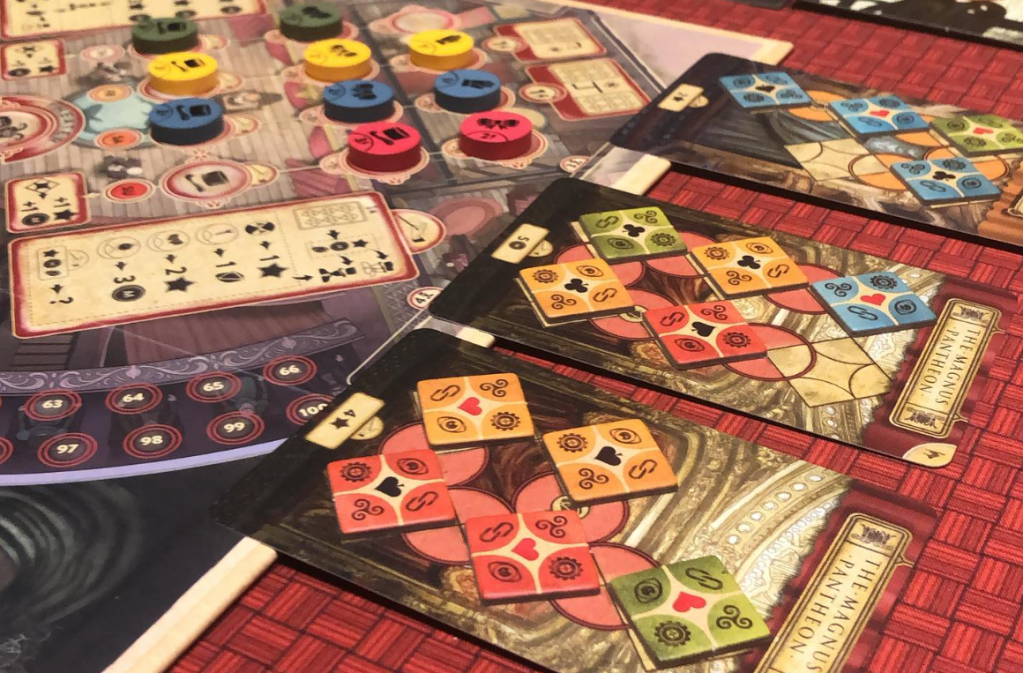
Sometimes it is the small details that make a game’s form reinforce the rules. In Trickerion, you gain cards with squares and circles on them. You also acquire the squares, as shown in the image below. Those squares fit nicely onto the cards in the designated spaces. Even more, the design on the card aligns with the circles. All of this makes it very obvious how to place these tokens. It is one aspect of the rules that is streamlined thanks to the graphic design of the cards and shape of the tiles.
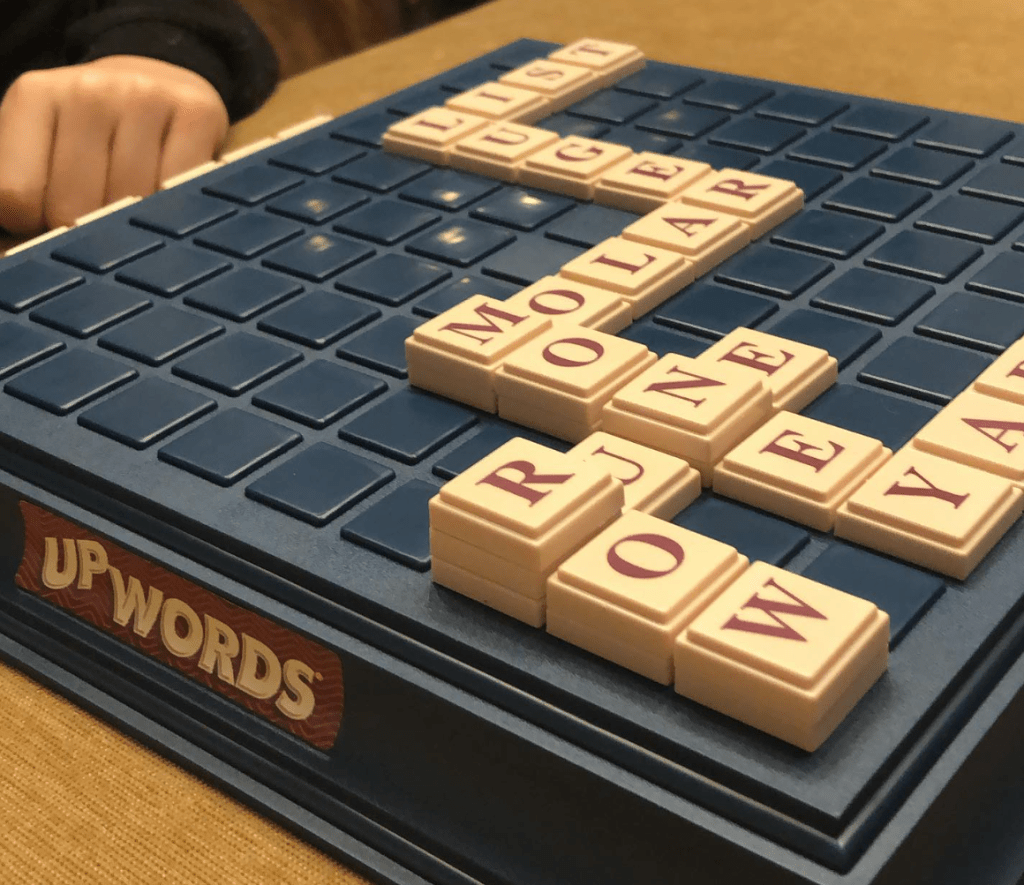
Finally, the game Up Words demonstrates how the physical form can almost create the rules, not just reinforce them. This game is based on the idea of stacking letters to change words. It’s like a 3-dimensional Scrabble. The design of the board and tiles makes it natural to slot the tiles in. And it makes it natural to stack the tiles. The physical form creates the twist on Scrabble and makes for a smooth and positive player experience.
Conclusion
Games can use their physical form to reinforce the rules in a variety of ways. This ranges from simple graphic design choices all the way up to custom plastic parts. At first, one might presume that creating physical parts that reinforce rules is going to be an expensive approach. While this might be true in some cases, I hope that you are inspired to think about this in more practical ways. I suggest you start by considering the aspects of your design that confuse players the most. Take that and think about how you could have the physical parts naturally lead the player to the correct usage.
